
Two hidden Nordic gems in northern Vermont and southern Quebec make for one stellar visit.
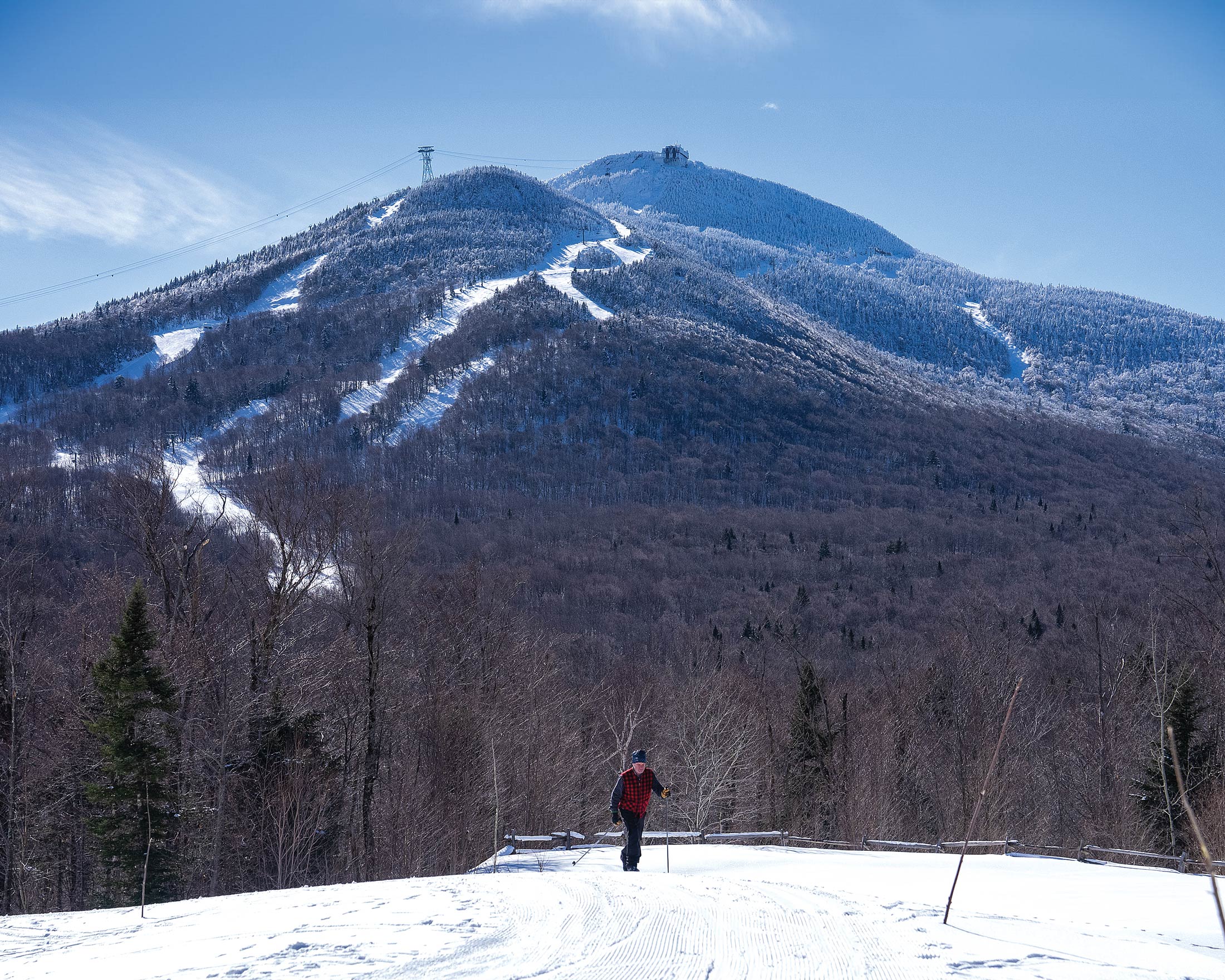
It took a moment of heavy breathing after I stashed my camera to catch up with Jay Peak Nordic trail coordinator Dave Byrnes. We were close to cresting the top of Heath’s Orchard, a winding, steep black-diamond loop on a former logging road when I spotted something that would have been out of place at most other touring centers: A pair of alpine ski tracks popped out of the wellspaced trees, ran across the groomed Nordic track, then disappeared back into the woods.
With a chuckle, I realized this exemplified the style of trail Byrnes had told me to expect. A few of the Nordic trails at Jay Peak, Vermont’s northernmost ski area, are right next to the resort’s alpine trails, carved into a topography where downhill skiers have long made sidecountry powder forays before catching the lift for another lap.
This was my first time discovering what the resort offers cross country skiers, after decades of snowboarding the powder at Jay. And that powder is legendary. Disconnected from the Green Mountains, the area pulls in moisture from the surrounding flatlands—ideal conditions for standout snowfall, as well as a longer season than at other Nordic centers in the state.
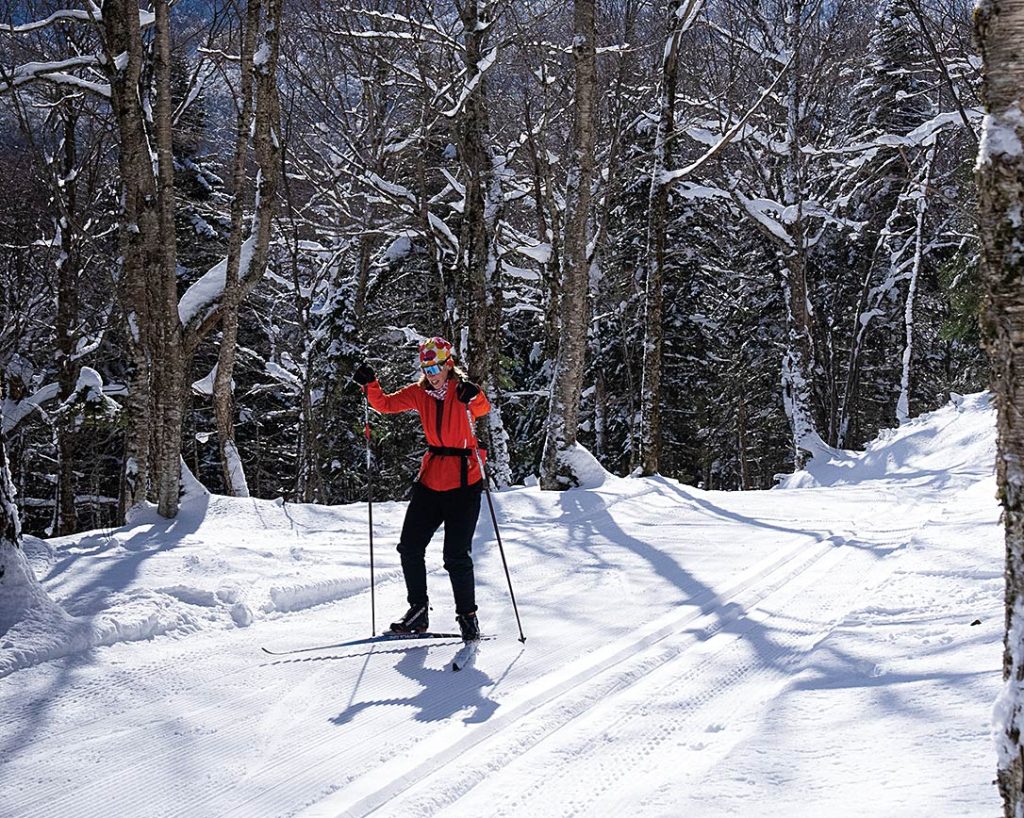
After pushing up the last 350 feet of vertical, we reached a flat and straight stretch of the loop. The air was shot through with crisp light, the trees coated in new snow and the morning clouds burning off under a stark February sun. I stopped to take in the view of the mountain’s 3,968-foot summit to the south, sighting Vermont’s only tram. The stand of birch, maple and hemlock thrummed with the energy of a rare (for New England) mid-winter bluebird day. We paused to chat with a pair of skiers visiting from New Hampshire, who had climbed Heath’s Orchard in the opposite direction.
As I eyed our prospects for the descent, Byrnes assured me the loop skis well in either direction. He kicked off around the corner, letting gravity guide him over a steep roller and out of sight. I followed suit, pitching myself into what would be the steepest run I’d tackled yet on cross country skis.
That sort of experience seems on par for Jay Peak. Careening from the summit, the resort’s alpine trails carve precipitous descents, with options to sneak into the woods on all sides. Keeping with that spirit, visitors shouldn’t expect homologated, race-ready cross country ski trails. But perhaps the challenge helps breed success. Nordic sprinter Jack Young, who grew up here, races for Colby College in Maine and was the second-fastest American in his World Cup debut in February 2024.
Jay’s Nordic trails date to when the tram was installed in 1967. In the late 1970s and early ’80s, however, alpine skiing’s boom shifted the ski area’s focus to its lift-served clientele, and many of the Nordic trails were abandoned. Ten years ago, the resort decided to restore them and dug through ’70s-era maps to replicate the original routes. Staff cut back the brush on trails in the mostly east-facing expanse that contains the now 25-kilometer network. Once the trails were reestablished, it became clear they share plenty with the rest of the mountain’s terrain.
“It’s challenging, and the views are breathtaking,” says Jamie Stenger, director of golf, retail and resort programming, whom I met at Jay Peak’s rental center. “We’ve got beginner terrain that is flatter and easy to access, but we’ve got a lot of side-mountain trails featuring elevation change. It adds excitement to the experience—the reward of going up is that you get to come on back down.”
The zipping descent from the top of Heath’s Orchard was just that. Strava clocked me at nearly 20 miles per hour, and I was thankful for arriving on a day with new snow and fresh grooming. The network features five other black-diamond routes, but the core trails are designated intermediate, along a few easy connectors that wind through the hemlock and maple forest.
Linking up Ullr’s Woods and the Bridges, Byrnes and I glided out of the hardwood canopy and across the resort’s golf course. Looking back, we had sweeping views of the white-dusted mountain, laced with alpine trails and bisected by tram cables.
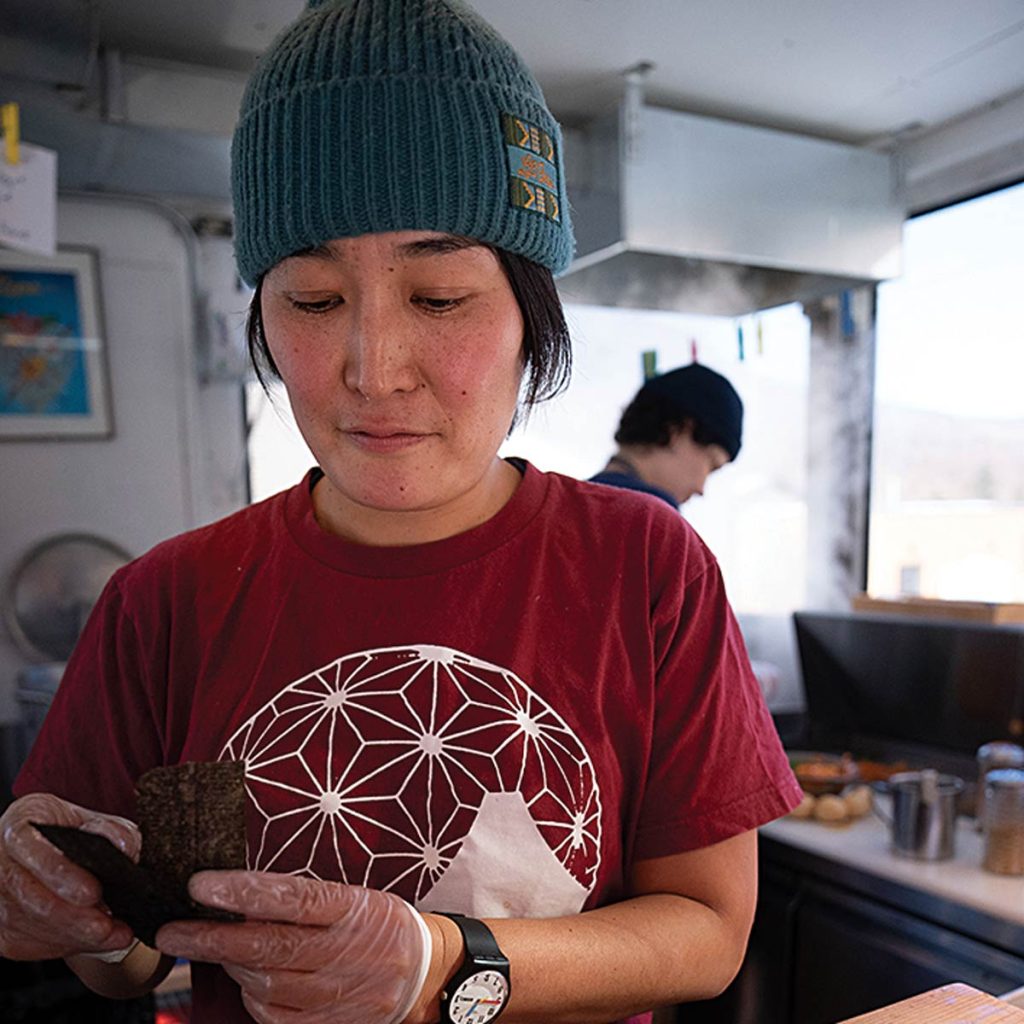
Happy to have cleansed my palate with some flatter cross country fare, I followed Byrnes to the tram base area, where we racked our skis and tucked into authentic Japanese ramen at Miso Hungry. Kicking back at an outdoor firepit, enjoying the best ramen I’ve tasted since Hokkaido, I appreciated one of the perks of basing a Nordic operation at a destination ski resort.
JAY PEAK
Adult day passes at the Nordic center are $15; inquire about lessons and tours.
GETTING THERE: Weather dependent, Jay Peak is an hour and a half drive from Burlington, Vermont.
WHERE TO STAY: A few miles east of the resort, the rustic Woodshed Lodge (rooms from $135), offers home-cooked breakfasts. The other east side option is the Jay Village Inn (rooms from $190), which has an adjoining restaurant. On the west side, rent the three-bedroom log chalet– style Big Jay’s Lodge (from $230 per night, plus about as much in fees, with a two-night minimum) or be budget savvy at Grampa Grunts ski dorm in Montgomery Center (from $50 a night).
EAT AND DRINK: Warm up after skiing with ramen or onigiri from Miso Hungry, a locally run Japanese vendor at the ski resort base. On the east side, the restaurant at the Jay Village Inn is a go-to for pizza. Heading west, grab a local burger at The Belfry, a Montgomery staple, or nosh on sushi and Asian-inspired cuisine at Omakase at the Tavern.
DON’T MISS: The combo of cross country and downhill reigns supreme at Jay Peak, where you
can swap out your Nordic gear in the parking lot mid-day and catch some afternoon laps off the tram.
KEEP GOING NORTH

A skier crosses one of several bridges on Plein air Sutton’s 1A trail. Jesse Huffman
By the time you get a trail map at Plein air Sutton, you’re already more than 1,400 feet in elevation.
When I was a kid, the proximity alert for closing in on Jay Peak would be picking up radio stations from Montreal. Now, it’s getting a cellphone alert that you’re in Canada. Your cell carrier may be wrong, but not by far.
By ski, the Canadian border is less than 20 kilometers from Jay, via the last section of the Catamount Trail, a winter ski route that runs the length of Vermont. By vehicle, it’s less than 45 minutes until you can click back into your skis at Plein air Sutton. This cross country and fat bike trail network just outside Sutton, Quebec, is adjacent to, but unaffiliated with, another prominent Eastern ski resort, Mont Sutton.
What it does share with its lift-accessed neighbor is a coveted position high on Rue Maple, the mountain access road. By the time you get a trail map at Plein air Sutton’s rustic chalet, you’re already more than 1,400 feet in elevation. Inside the rental center, a wood stove and seats invite guests to linger before heading back out for another tour. I eyed the homemade soup warming on the stove but knew that with temperatures climbing above freezing, and the fresh snow going from soft to slushy, it was time to hit the trails.
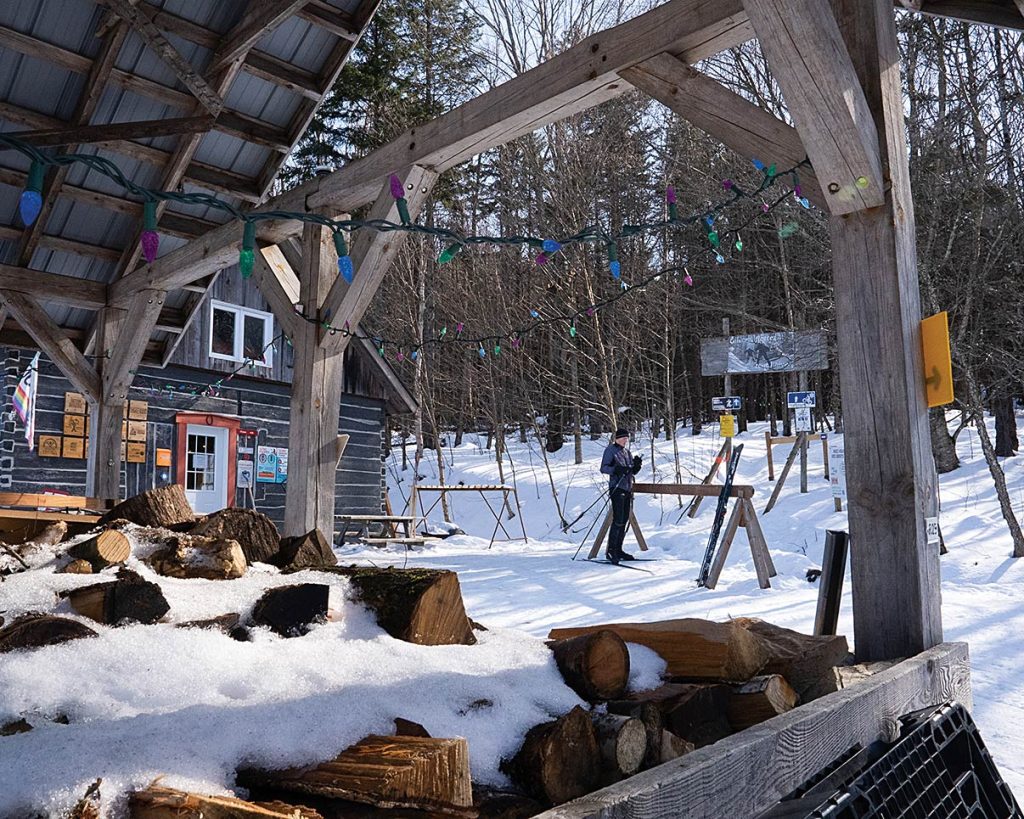

The 16-kilometer network winds through a river basin north of 2,391-foot-high Pic Abenakis. I kicked off onto narrow trails, tackling a series of blue and then black ascents. The hush of the century-old hemlock forest lent a remote feel, even though the trailhead is just a mile from the lifts at Mont Sutton and 2.5 miles from downtown. About an hour and a half southeast of Montreal, Sutton was an agricultural town before the ski area arrived in 1960. The resort, and the later advent of mountain biking trails, turned this small town (population 4,500 in 2021) into a year-round tourist destination centered around skiing, biking, arts, breweries and food.
Sutton’s original cross country ski trails were founded in 1973 on the grounds of the Hotel Horizon, just down the Rue Maple. After falling into disuse, the nonprofit Plein air Sutton took up the work of reclaiming the trail network in 2016 and began grooming for classic skiing (with 5 kilometers for skating). In the future, the organization plans to groom the longest (at 5 kilometers) and highest (topping out at 2,822 feet) trail, which is currently a black diamond touring route.
Looping across Plein air Sutton’s multiple bridges, the streams below gurgling in the warmer weather, I breathed in the fresh, forested air. Back at the chalet, I asked Pascal Vinh Nguyen, the operation’s general director, for a lunch recommendation in town. Soon, I was pulling up a stool at the Auberge Sutton Brouërie, one of two microbreweries in town, and fortifying for the drive back south with the soup special and pork tacos. Impressed once again by both the quality of the skiing and the food, I promised myself I’d return.
I’d started this trip as a hesitant Nordic traveler. Usually, I pick up cross country skis to explore my own backyard. But visiting these two destinations underscored that Nordic skiing is an ideal way to uncover other facets of familiar places (in this case, Jay Peak) and explore novel locations (Sutton). This winter, I can’t wait to head out, Nordic skis in hand, to discover more of these experiences.
PLEIN AIR SUTTON
Adult day trail passes are $21.75 Canadian.
GETTING THERE: Weather dependent, Plein air Sutton is an hour and half from either Montreal or Burlington. While most of the drive is flat, the access road to Mont Sutton and the trailhead are steep, and snow tires are recommended.
WHERE TO STAY: Sutton is a fantastic small town, combining hip businesses with outdoor access. The modern, casual Hotel Horizon (rooms from $160 Canadian) puts you right near the trails, with amenities including a sauna, pool and hot tub.
EAT AND DRINK: Downtown, Auberge Sutton Brouërie offers rotating craft taps and fare that goes beyond the usual burgers to include seasonal specials like an umamiinfused Korean bowl. Just up the street, Pixel Nano serves creative small plates and Reserve Naturelle Caviste nods to local vineyards with its full-service wine bar.